
|
|
||||
|
|
||||
|
|
||||
|
|
||||
|
|
||||
|
|
||||
|
|
||||
|
|
||||

|
|||||
Monday, June 10, 2019
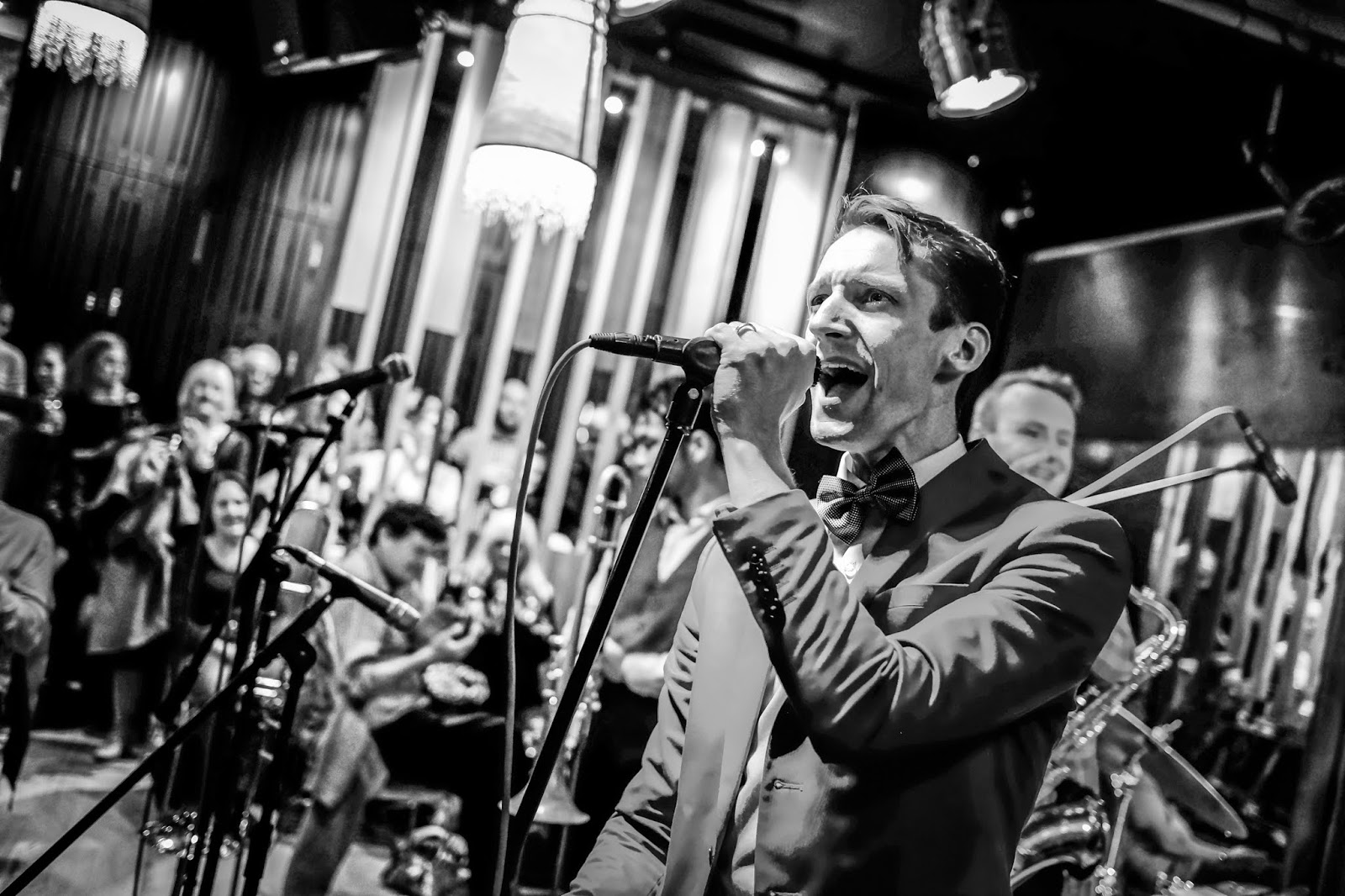
Wellington Jazz Festival 2019 - Photos




Sunday, June 09, 2019
GRG67 wins the Tui - Best Jazz Artist 2019
 |
| Roger Manins (GRG67) |
GRG67’S album is The Thing. On December 10, 2016, GRG67 performed
‘recital no.3’ as part of Roger Manins's Doctor of Musical Arts requirements.
This album represents just some of the music performed that afternoon. After
curating a number of compositions, Roger Manins needed to find the right
musicians to help bring his visions to life. And so GRG67 was born, consisting of Roger Manins, Michael
Howell, Mostyn Cole, and Tristan Deck. KungFu
Alto, Bicycle Buddies, Dark Bright, Chook 40, and Psalm
were recorded live at the recital mentioned above, while 10:15, The
Thing and Crab Empathy were recorded later in the day. All recorded by Rattle Records owner and
Engineer, Steve Garden.

Recorded Music NZ Best
Jazz Artist 2019 Finalists: Good
Winter by Antipodes (Luke
Sweeting, Jake Baxendale and Callum Allardice, No Dogs Allowed by DOG (Kevin Field, Ron
Samsom, Roger Manins and Olivier Holland) and The Thing by GRG67 (Roger
Manins, Michael Howell, Mostyn Cole, and Tristan Deck).
Also presented
tonight was the APRA Best Jazz Composition Award
2019 Finalists: Winner - Chungin' by Callum
Allardice. The other finalists were Follow The Sugar To The Gee by
Grant Hughson and Cerulean
Haze by Jasmine Lovell-Smith (Who has been commissioned
to write two new pieces for this year’s Jazz Festival with Lex French).
For more information go to
http://apraamcos.co.nz/news/2019/may/2019-nz-jazz-awards-finalists-announced/
Friday, June 07, 2019
Review: Herbie Hancock, Wellington Jazz Festival Michael Fowler Centre 5 July 2019
 |
| Photo: Tim Gruar |
I’ve been to the Wellington Jazz Festival many times over the years and seen some fantastic performances but none has been greater than Wayne Shorter (who was here two years ago) and now Herbie Hancock. He is the absolute master – his universal appeal, wide influence on music, pioneering use of synths and keyboards, the re-invention of what funk is and, of course, his association with Miles Davis.
Hancock was 23 when Davis invited him to join his band, and what a band that was: with Davis leading on trumpet, Shorter (saxophone), Ron Carter (bass) and drummer completing the team. Aficionados will argue until the cows come home about the minor details but that was Davis’s greatest quintet was one of the most important groups in jazz history.
“Those were very seminal, important days for me,” he told the Aussie press, recently, “and anybody who’s been influenced by not only Miles or been influenced by my playing.” He describes Davis as “the Jedi master”, and “Wayne Shorter …He’s like the living Yoda to me.” He even paraphrases Miles tonight, noting that his band is all guys – a loss to the world of jazz (no women).
His back catalogue is phenomenal. Next to Stevie Wonder, he’s a house hold name and a giant in the craft. Recent set lists have featured a range of work over the mid 70’s, his ‘classic years’. There’s a strong rumour that the 79 year old is working on a new album, one already being talked up as his most ambitious in years, and if the stars align it ‘might’ feature a cameo from one of the world’s biggest rappers, Kendrick Lamar, although that’s still unconfirmed.
In some concerts recently he has been seen on stage playing the Moog Liberation keytar, that emblem of the 80s which he used for the iconic digital track Rockit. I really wanted to see that tonight.
Regarding the set list, what exactly was on the menu tonight was a vivid point of discussion as I settled down to my seat. There were those wanting something from his early Blue Note records, maybe ‘Maiden Voyage’ (1965) or ‘Nefertiti’ (the 1968 Miles Davis album that’s the almost perfect point for post-bop). Then there were those wanting a re-creation of his 1973 funk masterpiece ‘Head Hunters’. I suspected it was going to be a bit of a milkshake of all of that.
Checking out his recent gigs, he’s still going strong. He’s just blasted shows in Perth, Sydney and Melbourne and a gig for International Jazz Day 2019 with an extraordinary All-Star Global Concert at the Melbourne Arts Centre’s renowned Hamer Hall alongside James Morrison, musical director John Beasley and an All-Star Global roster of artists from more than a dozen countries.
It’s the opening of the Wellington Jazz Festival. So after a short mihi and a speech from the Artistic Director Marnie Karmelita it all kicks off. Out come the four musicians and everyone cheers loudly, and rightly, for Herbie Hancock. The place is packed to the rafters with all ages. Even the choir stalls have temporary seating added, giving a 360 ambience to the concert as the audience surrounds the band on all four sides. They blast into a maelstrom of beguiling, cascading abstract rhythms of ‘Overture’. Almost immediately Lionel Loueke (Guitar/Vocals) goes ‘off piste’ with a volley of crazy digital toys that turn his headless all wood body guitar into a weapon of mass delusion. It mimics keyboards, synths, African instruments and even a sitar.
For the second track Loueke goes totally nuts, drumming his instrument, finger picking, rubbing it like a violin and ‘singing’ through it to transform his one voice into an infinite choir of many. Lionel Loueke’s ‘Dark Lightning / Chameleon’ was one mesmerising party trick. Even Hancock himself a pioneer of digital music is blown away. He sits awestruck on his piano stool watching with a huge grin on his face.
Loueke’s not the only incredible player on the stage. Veteran drummer Vinnie Colaiuta would rival Wayne Shorter any day. His playing is well beyond simple syncopated time keeping as he carves out hip hop and funk rhythms and juxtaposes them with deliberate cymbal crashes, almost in a competitive shouting match with the steady, reliable engine room bass of James Genus. There’s genuine playfulness and frivolity in Hancock’s style and it’s infectious. Everyone was having a ball on stage. Hancock slides between caressing the keys on his Kronos to tinkling the ivories on the grand, and, at times effortlessly playing both at once.
At one point I wonder why Hancock hasn’t made another album in recent years. But watching him on stage you can see why. He still feels absolute joy at playing live, and every performance is improvised and inventive and there’s complete passion behind it. Old tunes get revitalised as if they were composed yesterday – like ‘Absolute Proof’ from Head Hunters, dripping in layers of funk – to ‘Come Running To Me’ from Hancock’s 1978 album Sunlight. He maximises the vocoder-type technology to digitize his voice and sing robotic but sweet harmonies. About an hour in, Hancock tries out ‘Secret Sauce’, a sprawling new number featuring more of Loueke’s steely guitar. Hancock shifts to his synthesizer for a stretch out, and eventually straps on an enormous white keytar which covers most of his small frame. You’d think he could barely hold it but instead swans around like it’s made of air.


Teasing us, Hancock finishes with a few bars of ‘Cantelope Island’ before launching into a fully abstracted and elongated free jazz rendition of the song. The audience applause is deafening. This version is an ecstatic jazz fusion fizz bomb, driving at break neck speed through endless twists and turns, navigated mainly by Loueke’s synthed up guitar which takes over the usual trumpet solos and blasts them into oblivion. When Colaiuta crashes out the concluding beats the room is on its feet, overcome and wired.
But we’re not quite done. The encore, you guessed it, is ‘Rockit’. Hancock, once again straps on the beast and lets rip, jamming with Loueke and playing off him like duelling banjos. I don’t think I’ll ever see a pioneer like Herbie Hancock ever again in my lifetime – a gifted jazz, electro and rhythm scene maker who plays with such immense passion and respect for his audience. Tonight, I witnessed a genius of sound creation, and a true and pure artist like no other.
Setlist:
- Overture
- Lionel Loueke’s Dark Lightening / Chameleon
- Actual Proof
- Come Running To Me
- Secret Source
- Alone Together
- Cantaloupe Island
- Rockit [encore]
This review originally appeared at: https://www.ambientlightblog.com/herbie-hancock-wellington-nz-2019/

Review: Ambrose Akinmusire Quartet – Wellington Jazz Festival, Michael Fowler Centre 6 June 2019
 |
| Photo:Tim Gruar |
Born and raised in Oakland, California, intrepid trumpeter Ambrose Akinmusire was as a member of the Berkeley High School Jazz Ensemble, where he caught the attention of saxophonist Steve Coleman who hired him as a member of his Five Elements band for a European tour. From there Akinmusire went from strength to strength, playing in the Monterey Jazz Festival's Next Generation Jazz Orchestra. Studying at the famous Manhattan School of Music before returning to the West Coast to take a master's degree at the University of Southern California and the Thelonious Monk Institute of Jazz in LA.
He’s racked up a stash of industry awards and released a bunch of very ambitious discs starting in 2007 with his debut recording Prelude... to Cora. He’s a man to hire having worked with Vijay Iyer, Aaron Parks, Esperanza Spalding, and Jason Moran. In 2011 Blue Note snapped him up and released his ground breaking album When the Heart Emerges Glistening. Four years ago he dropped The Imagined Savior is Far Easier to Paint, followed by appearances on Kendrick Lamar's 2015 big effort To Pimp a Butterfly.
Critics agree, when last year he pulled off something of a small miracle of synthesis with Origami Harvest combining state-of-the-art improvisation with stylish, sophisticated pieces for string quartet, experimental electronics, and a dialogue of politically charged spoken word ‘beat poetry‘ performances. With a wind up like that I was fully charged with anticipation.
 |
| Photo: Tim Gruar |
But first up NZ School of Music Big band, conducted by Roger Fox, gave us a short set played by 15 students, mainly horns. They blasted through a rapid paced selection from Miles Davis, Herbie Hancock and a couple of other standards. Sadly, Fox’s break neck speed interpretation of Cheek To Cheek completely ran over it’s fledgling vocalist, leaving her in dishevelled heap on the side of the road. Ambrose Akinmusire has been up at the school teaching and mentoring the trumpeters today. Many in the band were clearly looking well pleased with their day. He'd graciously given some stage time for the students to get a bit of large hall experience. While it’s clear these kids were nervous they had potential and it showed. It was great to see our musical future is in good hands.
After a quick reset, we're underway with the main act. Tonight's audience was smaller and more intimate than last night with Herbie Hancock but still enthusiastic and engaging. A younger set but that's no surprise given that his latest album is such a wide ranging selection incorporating everything from chamber music to rap and hip hop. I’d hoped the night would include some of the material from Origami Harvest but that wasn’t on the agenda. Instead, the show drew inspiration from When the Heart Emerges Glistening and The Imagined Savior is Far Easier to Paint. I say ‘inspiration” because none of these loose, free jazz approximations were announced. Even the most ardent fan would have trouble deciphering what belonged on wax and from which record it came from.
The first thing that strikes you is how incredibly coherent and tight this quartet is. No surprise, given that they’ve been operating as a working unit for nearly seven years. Individually, any one of these players could hold their own. But working together with this alchemist, Ambrose, Sam Harris (piano), Harish Raghavan (bass) and Kweku Sumbry (drums) reach a considerably higher plain. Watching this team at work, it seems to me more logical to describe how they operate rather than how they are lead.
 |
| Photo: Tim Gruar |
At just 21 and only recently graduated, Sumbry proved himself to be the real the star tonight. He gave us a relentless onslaught of multi cadenced rhythms and counter rhythms. There were times when his left and right hand, left foot and right foot were all travelling in different directions that made no sense but were perfectly aligned to navigate this twisted landscape designed and laid down by the other three.
I’d heard that Akinmusire is the future of trumpet playing in the jazz world, so tonight I was expecting great things. But somehow I felt a little bit let down. He seemed to be leading an the unremitting search for contrast, for tonal texture, to take the listener somewhere unexpected. Yet at the same time, he seemed to get a bit lost. His unstructured playing sometimes fell a bit flat to these ears. And a bit pointless. Still I’m not a player. Sometimes abstract playing is about the sculptures they create in your ears, rather than a simple melody abstracted and manipulated. Perhaps it was the odd, tuneless squeaks and blasts that didn’t go with the rest of the composition.
Occasionally, I thought he was playing bad, unintentional notes, as if his trumpet was malfunctioning. Only once did we get a proper solo section, which was simply a selection of random arpeggios, a re-imagining of a Bach prelude, or something like that. Other times he teased us into more conventional rich atonal moments that were more familiar to conventional jazz playing. It was only then that I really saw the skill bubble up. Yet playing this was seemed like a cop out. Where was the brash experimentation of his recorded albums? Ultimately I felt dissatisfied.
I’d like to say our attention was fully held through out the night but this wasn’t entirely true. I don’t want to write off the night as mediocre but I did come away feeling like there was more to this than I’d received. Akinmusire is clearly a musician’s musician and there were several mesmerising solos, especially from young Kweku Sumbry who is definitely one to watch, but beyond there seemed to be little more than a sustained intention to preserve a level of the Avant Guard within the confines of conventional modern jazz.

Wednesday, June 05, 2019
2nd Unit - What We Do In The Shadows


Kia ora Human!
Second Unit needs you. Like, urgently. Before sunset preferably.
Come and explore, investigate, party and play on a live-action film set where nothing is quite as it seems...
Come and explore, investigate, party and play on a live-action film set where nothing is quite as it seems...
What is Second Unit you ask?
Take a film set, a music festival, a comedy gig and a choose-your-own-adventure game for good measure. That’s Second Unit – not your average night out.
You and a cast of humans are needed for this supernatural misadventure into the world of film, inspired by vampire mockumentary What We Do in the Shadows. You’ll be assigned the role of a film extra and be enlisted to help wrap this film shoot of unholy proportions.
Buy your ticket and you'll gain access to an amazing and anarchic world built specially for this event on Wellington's waterfront. Allow yourself 90 minutes to explore, but don't be surprised if you want to stay...
The season opens on Thursday 13 June and has a strictly limited season until Sunday 30 June.
The season opens on Thursday 13 June and has a strictly limited season until Sunday 30 June.
Saturday, June 01, 2019

FRIDAY 30TH AUGUST
KARANGAHAPE ROAD DISTRICT
TĀMAKI MAKAURAU
EARLY BIRD PASSES ON SALE 9AM, FRIDAY 31 MAY!
Tāmaki Makaurau's Karangahape Road district will come to life this August 30th with some extra flavour as The Others Way Festival returns for its fifth year running. Save the date, and stay tuned for more festival news over the coming weeks!Early bird passes go on sale at 9.00am, Friday 31st May. Get in before the pack by securing your passes from the spiritual home of The Others Way, Flying Out (online or in store: 80 Pitt Street, Newton) or from Undertheradar. Limited to 2 x tickets per purchase.
Since the event’s inception in 2014, the beloved grassroots music festival has become somewhat of an institution in the independent music scene of the city, attracting swarms of music-loving festival goers each year as Karangahape Road and the surrounding streets host a magical night of music and good vibes.
For 2019, the multi-venue extravaganza will take place across beloved venues such as The Wine Cellar, Whammy! Bar and its adjoining Whammy! Backroom, Neck of the Woods, The Fale at Samoa House, Cross Street Market, Galatos, The Studio, The Thirsty Dog, and Audio Foundation.
Joining the venue bill this year, The Others Way Festival organizers are proud to announce the addition of two new venues; the majestic Hopetoun Alpha and iconic Mercury Theatre.
The annual event is hosted by Flying Out, an Auckland-based record store, distributor and home to Flying Nun Records, Arch Hill and numerous other local and international labels.
Follow Flying Out on social media to keep updated with festival lineups,
artist info and more!
Wednesday, May 29, 2019
The annual Wellington Jazz Festival is the highlight of Aotearoa’s mid-winter music calendar, featuring some of the finest musicians from across New Zealand and around the globe.

Jazz Legend Herbie Hancock headlines this year’s programme. Winner of 14 Grammy Awards during his illustrious career, Hancock has had an unparalleled influence on acoustic and electronic jazz and R&B for more than five decades.


Jazz aficionados and intrepid newcomers can explore more than 100 gigs across the city, with five days of serious play bringing the sounds and spirit of jazz to the capital’s streets, cafes, bars and live music venues.

The author of modern day standards such as Cantaloupe Island, Chameleon and Rockit, Hancock's appeal transcends genres while maintaining an unmistakable style.
From his early beginnings with the Miles Davis Quintet, to collaborations with the likes of Wayne Shorter, Stevie Wonder and and Chick Corea, Herbie Hancock is equally at home performing with contemporary artists including Annie Lennox, Christina Aguilera, Paul Simon, Pink and more recently with Kendrick Lamar, Thundercat and Kamasi Washington. In 2019, the 79-year-old maestro remains at the forefront of world culture, technology, business and music.

The Festival also features the explosive funk ensemble Ghost Note. Headed by Snarky Puppy’s multi-Grammy Award-winning percussion duo of Robert ‘Sput’ Searight and Nate Werth, this dynamic ensemble is pushing funk music into the future, building on the uplifting pioneering foundations laid out by the likes of James Brown and Sly & The Family Stone, and infusing their fresh take with tastes of afrobeat, hip-hop, psychedelia, world folklore and more.

Another visitor will be ground breaking trumpeter Ambrose Akinmusire. Motivated by the spiritual and practical value of art, Ambrose Akinmusire aspires to create richly textured emotional landscapes that tell stories of the community, record the time, and change the standard.
On a perpetual quest for new paradigms, Ambrose masterfully weaves inspiration from other genres, art and life in general, into compositions that are as poetic and graceful as they are bold and unflinching. His music is an active response to societal divides, the way our politics hold us emotionally hostage, and the ever-growing list of black lives ended by structural racism.
A powerful performance of genre-defying music, that sits within the centre and at the periphery of jazz, while intersecting the circles of hip-hop and classical music.

And then there's the exquisite vocals of Alicia Olatuja. Praised by the New York Times as ‘a singer with a strong and luscious tone and an amiably regal presence on stage’, Alicia Olatuja has been astounding audiences with her exquisite vocals, artistic versatility and captivating demeanor.
Her critically-acclaimed album Intuition: Songs from the Minds of Women, celebrates the achievements of esteemed female composers including Brenda Russell, Sade, Tracy Chapman, Kate Bush, Angela Bofill, Joni Mitchell and Linda Creed. Olatuja first gained international attention as the featured soloist with the Brooklyn Tabernacle Choir at President Barack Obama’s second inauguration.
She recorded her first solo album, Timeless in 2014 and has since performed at Newport, Monterey and Montreal Jazz Festivals, among others.
Further highlights include a collaboration between composers Lex French and Christine Jensen, along with perennial favourite the Rodger Fox Big Band spearhead the distinct sounds of New Zealand jazz. The full programme is available now at: https://www.jazzfestival.nz
Hopestreet Records turn 10!

HOPESTREET RECORDINGS
2009 - 2019 Anniversary Showcase
June 6 @ Darebin Arts Centre
Melbourne International Jazz Festival
Waaay back in 2009, a funky new Melbourne record label was launched with a seven-inch vinyl single by The Putbacks. Ten years and thirty-four records later, The Putbacks and Emma Donovan headline a showcase event at the Darebin Arts Centre featuring our founding artists as well as our latest additions The Montgomery Brothers, Parvyn and Karate Boogaloo.
Hopestreet have provided Groove with many funky tunes over the years, especially the sublime Bombay Royale and The Cactus Channel.

+ Listen to The Cactus Channel on Bandcamp, Spotify or Apple Music
+ Follow their tour dates
+ Watch the video for "Storefront" on Youtube
Hopestreet have provided Groove with many funky tunes over the years, especially the sublime Bombay Royale and The Cactus Channel.

+ Listen to The Cactus Channel on Bandcamp, Spotify or Apple Music
+ Follow their tour dates
+ Watch the video for "Storefront" on Youtube

+ Listen to The Bombay Royale on Bandcamp, Spotify or Apple Music
+ Follow their tour dates
+ Watch the video for "I Love You Love You" on Youtube

+ Listen to The Putbacks on
+ Follow their tour dates
+ Watch the video for "The Ways (with Bilal)" on Youtube

Tuesday, May 28, 2019
2019 Aotearoa Jazz Awards

The best in Aotearoa jazz will be at the at the 2019 New Zealand Jazz Awards Sunday 9 June 2019. The nominations for this year are:
Recorded Music NZ Best Jazz Artist 2019 Finalists: Good Winter by Antipodes (Luke Sweeting, Jake Baxendale and Callum Allardice, No Dogs Allowed by DOG (Kevin Field, Ron Samsom, Roger Manins and Olivier Holland) and The Thing by GRG67 (Roger Manins, Michael Howell, Mostyn Cole, and Tristan Deck).
APRA Best Jazz Composition Award 2019 Finalists: Chungin' by Callum Allardice, Follow The Sugar To The Gee by Grant Hughson and Cerulean Haze byJasmine Lovell-Smith.
Sunday 9 June
New Zealand Jazz Awards Partners:


Wednesday, May 15, 2019
Doris Day, Movie Star Who Charmed America, Dies at 97

Doris Day, the freckle-faced movie actress whose irrepressible personality and golden voice made her America’s top box-office star in the early 1960s, died on Monday 13 May at her home in Carmel Valley, Calif. She was 97.
The Doris Day Animal Foundation announced her death.
Ms. Day began her career as a big-band vocalist, and she was successful almost from the start: One of her first records, “Sentimental Journey,” released in 1945, sold more than a million copies, and she went on to have numerous other hits. The bandleader Les Brown, with whom she sang for several years, once said, “As a singer Doris belongs in the company of Bing Crosby and Frank Sinatra.”
But it was the movies that made her a star.
Between “Romance on the High Seas” in 1948 and “With Six You Get Eggroll” in 1968, she starred in nearly 40 movies. On the screen she turned from the perky girl next door in the 1950s to the woman next door in a series of 1960s sex comedies that brought her four first-place rankings in the yearly popularity poll of theater owners, an accomplishment equaled by no other actress except Shirley Temple.
In the 1950s she starred, and most often sang, in comedies (“Teacher’s Pet,” “The Tunnel of Love”), musicals (“Calamity Jane,” “April in Paris,” “The Pajama Game”) and melodramas (“Young Man With a Horn,” the Alfred Hitchcock thriller “The Man Who Knew Too Much,” “Love Me or Leave Me”).
James Cagney, her co-star in “Love Me or Leave Me,” said Ms. Day had “the ability to project the simple, direct statement of a simple, direct idea without cluttering it.” He compared her performance to Laurette Taylor’s in “The Glass Menagerie” on Broadway in 1945, widely hailed as one of the greatest performances ever given by an American actor.
She went on to appear in “Pillow Talk” (1959), “Lover Come Back” (1961) and “That Touch of Mink” (1962), fast-paced comedies in which she fended off the advances of Rock Hudson (in the first two films) and Cary Grant (in the third). Those movies, often derided today as examples of the repressed sexuality of the ’50s, were considered daring at the time.
“I suppose she was so clean-cut, with perfect uncapped teeth, freckles and turned-up nose, that people just thought she fitted the concept of a virgin,” Mr. Hudson once said of Ms. Day. “But when we began ‘Pillow Talk’ we thought we’d ruin our careers because the script was pretty daring stuff.” The movie’s plot, he said, “involved nothing more than me trying to seduce Doris for eight reels.”
(Ms. Day and Mr. Hudson remained close. Not long before his death from AIDS in 1985, he appeared with her on her television show “Doris Day’s Best Friends” and at a news conference. “He was very sick,” Ms. Day said. “But I just brushed that off and I came out and put my arms around him and said, ‘Am I glad to see you.’ ”)
Following “Pillow Talk,” which won Ms. Day her sole Academy Award nomination, she was called on to defend her virtue for the rest of her career in similar but lesser movies, while Hollywood turned to more honest and graphic screen sex to keep up with the revolution sweeping the world after the introduction of the birth control pill.
Ms. Day turned down the part of Mrs. Robinson, the middle-aged temptress who seduces Dustin Hoffman, in the groundbreaking 1967 film “The Graduate,” because, she said, the notion of an older woman seducing a young man “offended my sense of values.” The part went to Anne Bancroft, who was nominated for an Academy Award.
By the time she retired in 1973, after starring for five years on the hit CBS comedy “The Doris Day Show,” Ms. Day had been dismissed as a goody-two-shoes, the leader of Hollywood’s chastity brigade, and, in the words of the film critic Pauline Kael, “the all-American middle-aged girl.” The critic Dwight Macdonald wrote of “the Doris Day Syndrome” and defined her as “wholesome as a bowl of cornflakes and at least as sexy.”
But the passing decades have brought a reappraisal, especially by some feminists, of Ms. Day’s screen personality, and her achievements. In her book “Holding My Own in No Man’s Land” (1997), the critic Molly Haskell described Ms. Day as “challenging, in her working-woman roles, the limited destiny of women to marry, live happily ever after and never be heard from again.”
Ms. Day in fact was one of the few actresses of the 1950s and ’60s to play women who had a real profession, and her characters were often more passionate about their career than about their co-stars.
“My public image is unshakably that of America’s wholesome virgin, the girl next door, carefree and brimming with happiness,” she said in “Doris Day: Her Own Story,” a 1976 book by A. E. Hotchner based on a series of interviews he conducted with Ms. Day. “An image, I can assure you, more make-believe than any film part I ever played. But I am Miss Chastity Belt, and that’s all there is to it.”
 |
| Doris Day with Roger Maris, left, and Mickey Mantle, who appeared in the 1962 film “That Touch of Mink,” in which she fended off the advances of Cary Grant. |
Doris Day was born Doris Mary Anne Kappelhoff in Cincinnati on April 3, 1922. (For years most sources gave her birth year as 1924, and so did she. But shortly before her birthday in 2017, The Associated Press obtained a copy of her birth certificate from the Ohio Office of Vital Statistics and established that she had been born two years earlier. After Ms. Day was shown the evidence, she said in a statement, “I’ve always said that age is just a number and I have never paid much attention to birthdays, but it’s great to finally know how old I really am.”) She was the second child of Frederick William von Kappelhoff, a choral master and piano teacher who later managed restaurants and taverns in Cincinnati, and Alma Sophia (Welz) Kappelhoff. Her parents separated when she was a child.
Ms. Day never wanted to be a movie star. At 15 she was a good enough dancer to win the $500 first prize in an amateur contest. Her mother and the parents of her 12-year-old partner used the money to take them both to Los Angeles for professional dancing lessons. The families intended to move west permanently, but Doris’s right leg was shattered when the automobile in which she was riding was hit by a train.
To distract Doris during the year it took the leg to mend, her mother — who had named her after a movie star, Doris Kenyon — paid for singing lessons. She was a natural.
 |
| Ms. Day won her sole Academy Award nomination for her role in the 1959 film “Pillow Talk,” one of three movies in which her co-star was Rock Hudson |
That first dog, Tiny, was killed by a car when Ms. Day, still on crutches, took him for a walk without a leash. Nearly 40 years later she spoke of how she had betrayed him. During the last decades of her life, through her foundation, Ms. Day spent much of her time rescuing and finding homes for stray dogs, even personally checking out the backyards and fencing of people who wanted to adopt, and she worked to end the use of animals in cosmetic and household-products research.
After the accident, Ms. Day never went back to school. At 17, having traded her crutches for a cane, she sang in a local club where the owner changed her name because Kappelhoff wouldn’t fit on the marquee. After a few months as a singer with Bob Crosby and His Bobcats in Chicago, she joined Les Brown and His Blue Devils.
Singing was just something to do until she married. “From the time I was a little girl,” she told Mr. Hotchner, “my only true ambition in life was to get married and tend house and have a family.”
But while Ms. Day was instantly successful as a singer and a movie actress, she was fated always to marry the wrong men. By the time she made her first movie she had been married and divorced twice.
Her first husband, Al Jorden, a trombone player, was violently jealous and had an uncontrollable temper. He hit her on the second day of their marriage and continued to beat her when she became pregnant and refused to have an abortion. She was married at 19, divorced and a mother at 20.
But she was undaunted. “All my life,” she told Mr. Hotchner, “I have known that I could work at whatever I wanted whenever I wanted.”
Her second husband, George Weidler, a saxophonist, was a gentle man. She was happily living with him in a trailer park in Los Angeles when he left, after telling her that he thought she was going to become a big star and that he didn’t want to be Mr. Doris Day.
She was approached at a Hollywood party by the songwriters Sammy Cahn and Jule Styne, who had written the score for “Romance on the High Seas,” a movie planned for Judy Garland. But Garland had turned the role down and Betty Hutton, her replacement, was withdrawing because she was pregnant. Warner Bros. was desperate, and the songwriters insisted that Ms. Day audition for the part.
 |
| Ms. Day with her dog in 1960. She spent much of her time rescuing and finding homes for stray dogs, and she worked to end the use of animals in cosmetic and household-products research. |
As candid in real life as her perky screen characters, Ms. Day admitted to the movie’s director, Michael Curtiz, that she had never acted before. But “from the first take onward, I never had any trepidation about what I was called on to do,” she said. “Movie acting came to me with greater ease and naturalness than anything else I had ever done.”
Reviewing “Romance on the High Seas” in The New York Herald Tribune, Howard Barnes wrote, “She has much to learn about acting, but she has personality enough to take her time about it.”
Playing the Wholesome Girl
Under personal contract to Mr. Curtiz, Ms. Day followed “Romance on the High Seas” with a series of musical comedies in which she played the pert and wholesome girl with hair and personality the color of sunlight. But even in the early 1950s she was nobody’s fool, and her characters had an unusual resilience, cockiness and competence.
In “By the Light of the Silvery Moon” (1953), about the trials of a small-town family, Ms. Day is first seen repairing her boyfriend’s car. If her fearless sharpshooting title character in “Calamity Jane” (1953) is finally induced to exchange her buckskins for a dress to wed Howard Keel’s Wild Bill Hickock, she still slips her six-shooter into her pocket to take along on the honeymoon.
And when Ms. Day opened her mouth to sing, the effect was magical. She had a perfectly controlled voice that brimmed with emotion. “It’s Magic,” which she sang in “Romance on the High Seas,” and “I’ll Never Stop Loving You,” which she sang in “Love Me or Leave Me,” were nominated for Academy Awards for best song. The two with which she is especially identified, “Secret Love,” from “Calamity Jane,” and “Que Sera, Sera,” from “The Man Who Knew Too Much,” won Oscars.
“Doris Day was the most underrated film musical performer of all time,” said Miles Kreuger, president of the Institute of the American Musical. “If only she had been at MGM instead of Warner Bros., they’d have given her challenging roles.”
When Ms. Day did get a chance to stretch as an actress, she could be memorable. In “Love Me or Leave Me” (1955), she gave a stirring performance as the singer Ruth Etting, whose life and career were dominated by a violent manager-husband who had ties to gangsters. She held her own against James Cagney’s powerful performance as the husband and flawlessly sang Etting classics like “Ten Cents a Dance” and “Chasing the Blues Away.”
Ms. Day married for a third time in 1951. Although that marriage, to Martin Melcher, her manager, seemed happy, she discovered after Mr. Melcher’s death in 1968 that he and his lawyer had embezzled or frittered away the $20 million she had earned and had left her $500,000 in debt. She agreed to star in a situation comedy to earn the money to pay off her debts.
That proved to be a wise move financially; “The Doris Day Show” had an extremely successful five-year run. (It underwent a number of changes in that time. Ms. Day’s character, a widow who lived on a ranch with her two children, got a job at a magazine in San Francisco in the show’s second season, and by the fourth season her children had been written out of the show.)
James Garner, who co-starred with Ms. Day in two 1963 films, “The Thrill of It All” and “Move Over, Darling,” told Mr. Hotchner, “Marty was a hustler, a shallow, insecure hustler who always ripped off $50,000 on every one of Doris’s films as the price for making the deal.”
Ms. Day sued the lawyer, Jerome Rosenthal, and eventually won a judgment for more than $22 million in 1974. In a 1986 interview Terry Melcher, her son by Al Jorden, said that she eventually got some of the money from an insurance company but “nothing like that amount.”
In 1976 Ms. Day married Barry Comden, a sometime restaurant manager 11 years her junior. They were divorced in 1981. During her marriage to Mr. Comden, she moved from Los Angeles to Carmel Valley, and she and her son became part owners of the pet-friendly Cypress Inn in the nearby beach town Carmel-by-the-Sea.
For the rest of her life she lived on a seven-acre estate with many more dogs than the zoning laws allowed. In the 1985-86 television season she was the host of “Doris Day’s Best Friends,” on the Christian Broadcasting Network, which focused on animal welfare.
Terry Melcher, her only child, who became a successful record producer, died in 2004. Her survivors include a grandson.
In 2011, three years after she received a lifetime achievement Grammy Award, Ms. Day surprised a lot of people by releasing her first album in almost 20 years, “My Heart,” which consisted mostly of songs she had recorded for “Doris Day’s Best Friends” but never released commercially.
Ms. Day, who summed up her fatalistic philosophy in the words of one of her biggest hits, “Que Sera, Sera” (“What will be, will be”), never liked unhappy endings. She told one interviewer: “It upsets me when the hero or heroine dies. I would like them to live happily ever after.”
But, except in movies, nobody lives happily ever after. Ms. Day told Mr. Hotchner: “During the painful and bleak periods I’ve suffered through these past years, my animal family has been a source of joy and strength to me. I have found that when you are deeply troubled, there are things you get from the silent, devoted companionship of your pets that you can get from no other source.”
“I have never found in a human being,” she added, “loyalty comparable to that of any pet.”
Subscribe to:
Posts (Atom)


